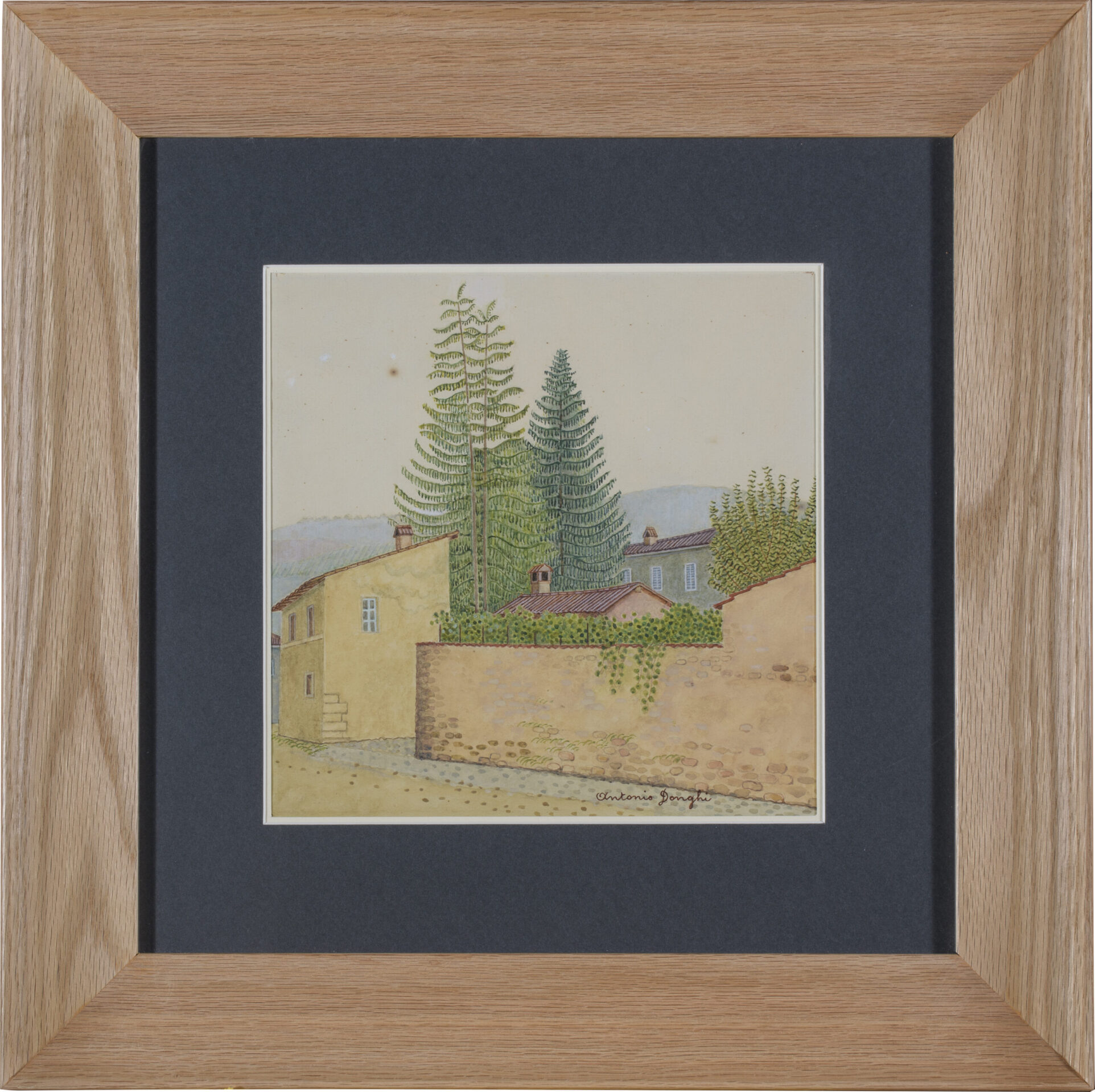
The composition is constructed with the rigorous clarity characteristic of Donghi’s mature artistic language. Low buildings occupy the foreground and middle distance, while two tall trees rise prominently at the center of the scene. Their vertical presence establishes the principal rhythm of the composition and creates a carefully balanced relationship between architecture and nature.
Donghi pays particular attention to the description of the landscape. Roof tiles, masonry, windows and foliage are rendered with meticulous precision, while the softly outlined hills in the background introduce a subtle sense of depth. The delicate chromatic range of the watercolor contributes to the work’s quiet, rarefied atmosphere.
The absence of figures further reinforces the silence of the composition. Architecture and nature are held in a measured balance that reflects Donghi’s distinctive vision: lucid, controlled and subtly enigmatic.
Antonio Donghi (Rome, 1897–1963) was one of the most distinctive figures of twentieth-century Italian figurative painting. He is particularly associated with Italian Magic Realism, a tendency characterized by precise observation of reality combined with an enigmatic and often motionless atmosphere. The Banca d’Italia collection similarly identifies the mysterious quality of Donghi’s landscapes and urban views as central to his relationship with Magic Realism.
This Antonio Donghi watercolor from 1955 offers an especially intimate example of the artist’s approach to landscape. The precision of the drawing is softened by the transparency of the medium, while the controlled composition retains the clarity and visual concentration that distinguish his work.
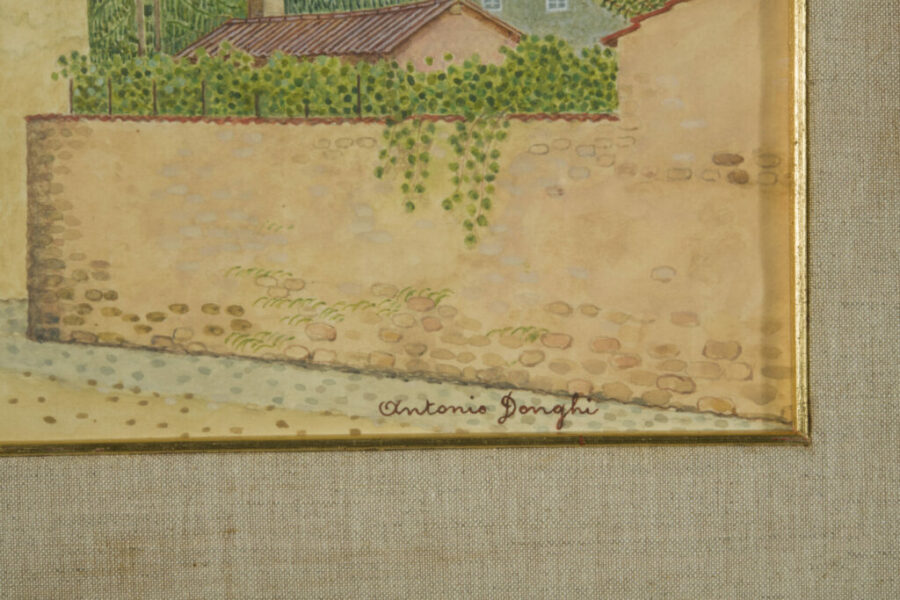
The artwork is signed “Antonio Donghi” lower right and is presented in a contemporary wooden frame with a dark mount.It is accompanied by a certificate of authenticity issued by Professor Rivosecchi, providing important documentary support for the artwork.