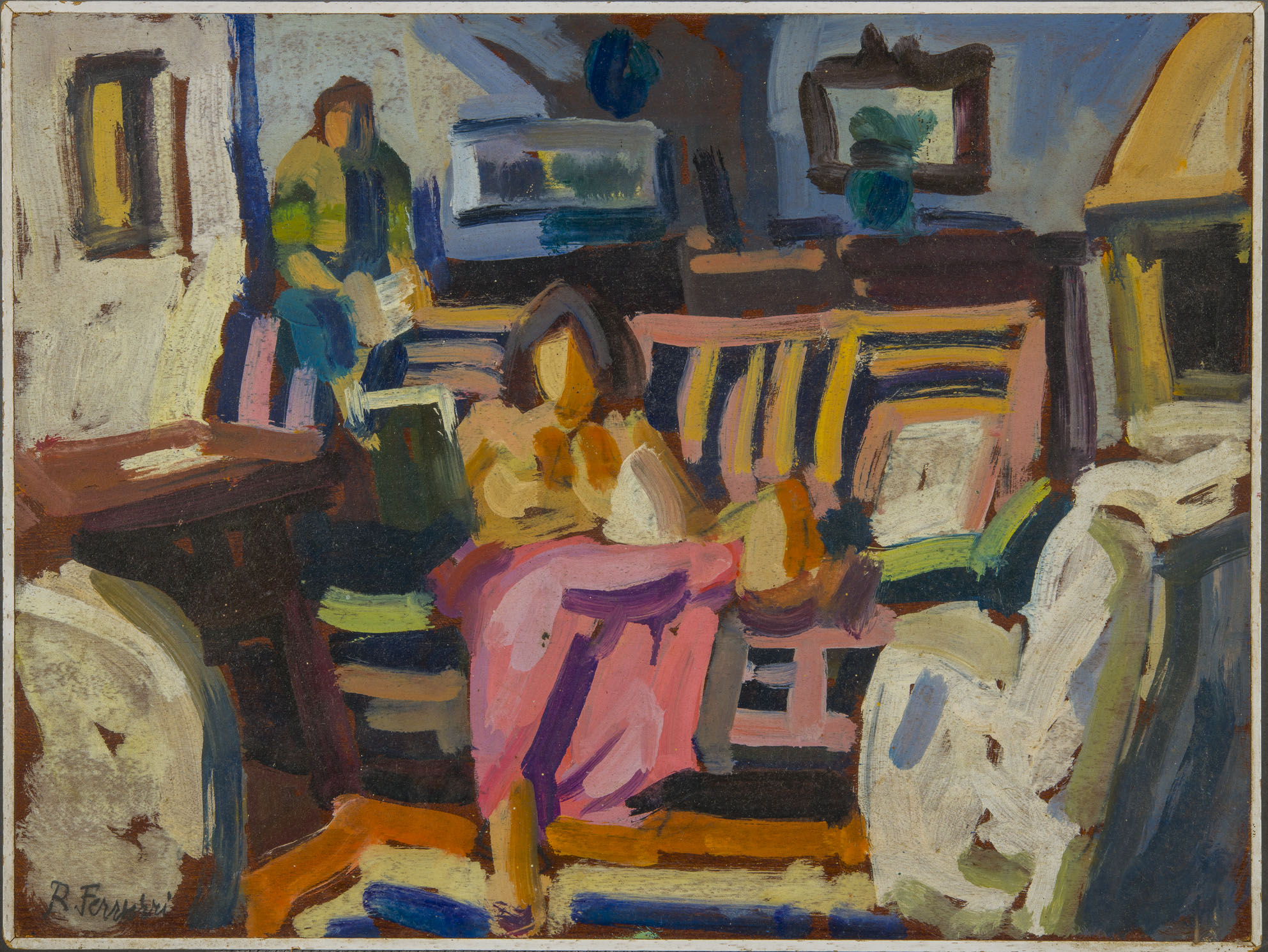
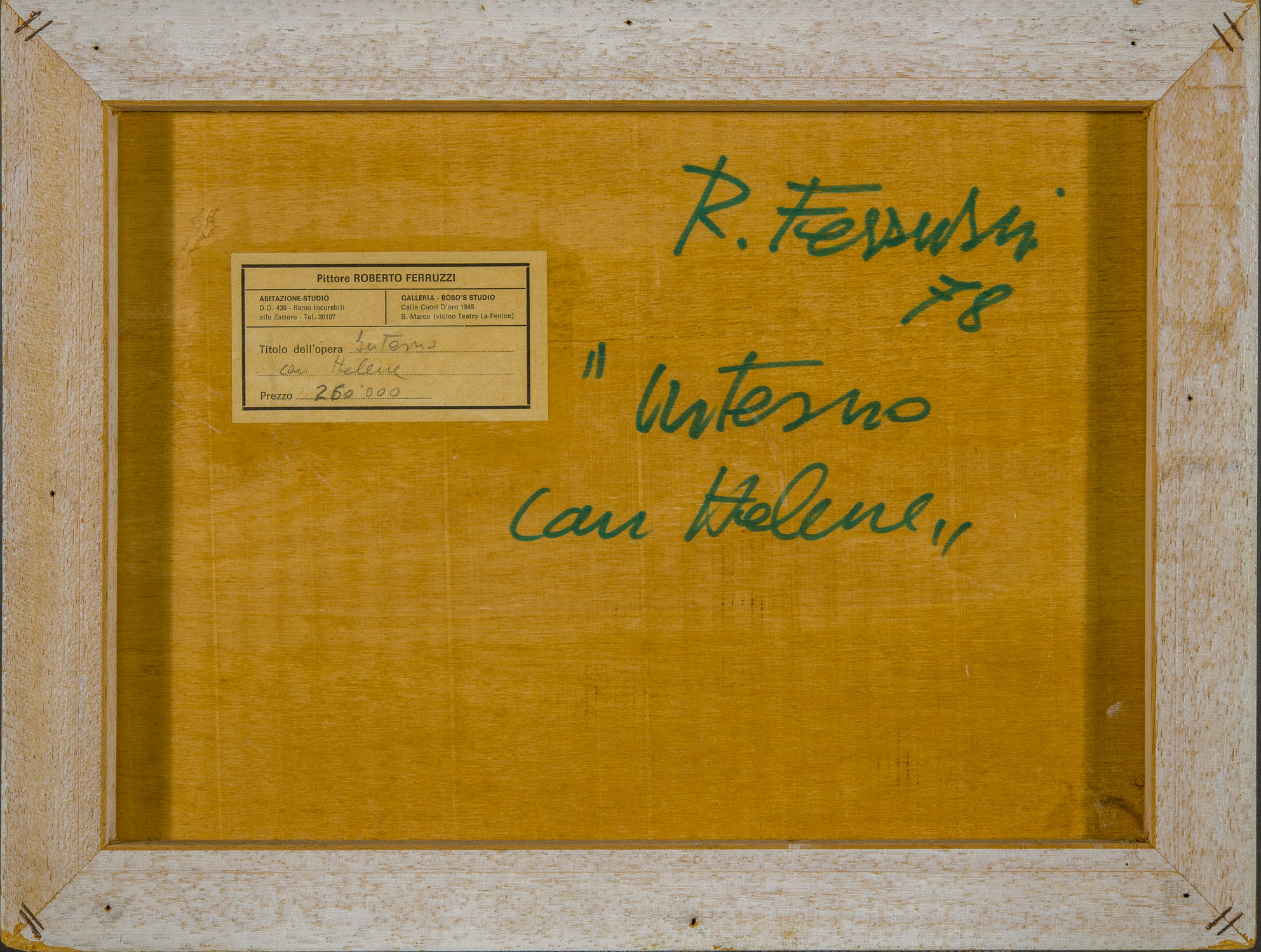
Interior by Roberto Ferruzzi is a signed oil on panel dated 1978, with title and date confirmed by inscriptions on the reverse. The composition presents a domestic setting animated by figures, furniture, and vivid chromatic passages, all rendered through a free and expressive painterly language.
The work does not rely on precise naturalistic description. Instead, it builds its strength through broad brushwork, balanced masses, and the dynamic relationship between occupied space and open areas. Chairs, table, fireplace, wall paintings, and the female figure create a lived-in interior shaped by color and rhythm rather than strict perspective.
Interior by Roberto Ferruzzi
This painting reflects a mature 20th-century sensibility and a personal approach to interior painting. Roberto Ferruzzi organizes the scene through a lively palette of pinks, blues, ochres, browns, and greens. Forms are simplified, at times abbreviated, yet always purposeful. Helene, evoked in the title, is not treated as a formal portrait but as a presence within the room, integral to the visual balance of the composition.
Painterly Quality and Decorative Appeal
Visible brushwork and layered passages of paint give the surface movement, material presence, and immediacy. The signature at lower left corresponds with the inscriptions on the reverse, where the artist’s name, the title Interior with Helene, and the date “78” appear. An old label on the back further supports the work’s cataloguing coherence.
Suitable for a refined private collection, a study, a library, or an elegant interior, this painting combines collectible interest with strong decorative value.
Discover more works in our 20th-century modern art collection and explore the artist’s background through external references such as artist documentation .
Brief artist biography
Roberto Ferruzzi, known as Bobo (Venice, 1927–2010), belonged to a family of artists and was the namesake grandson of Roberto Ferruzzi, the painter of the celebrated Madonnina. Trained at the Venice School of Art and active during the second half of the 20th century, he developed a free and personal pictorial language, attentive to the vibration of color, lived interiors, and the poetry of Venetian life.