Anton Giulio Bragaglia (1890–1960) explored photography, film, art, and theater with a restless experimental spirit. His work and the activities of Casa d’Arte Bragaglia offer a distinctive perspective on Rome’s avant-garde in the early twentieth century.
His archive brings this world into focus through photographs, publications, correspondence, and designs for the stage.
Early years and Futurist photodynamism
Bragaglia began working in film in 1906 at Cines, where his father, Francesco, served as general manager.
Working with his brother Arturo, he developed Futurist photodynamism: an approach to photography that sought to capture the continuity of movement rather than a single frozen instant.
In 1916, he founded the journal Cronache d’attualità and the film production company Novissima Film. His cinematic experiments included Thaïs, filmed in 1916 and released in 1917, with sets by Enrico Prampolini.
Casa d’Arte Bragaglia Art and experimentation in Rome
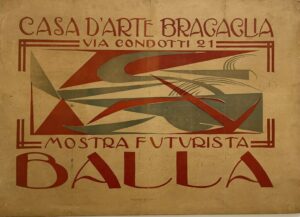
Founded in 1918, Casa d’Arte Bragaglia opened with an exhibition devoted to Giacomo Balla.
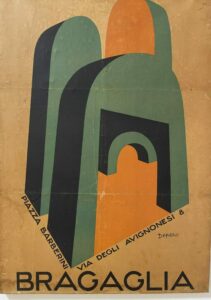
The gallery became a meeting place for artists and writers, bringing exhibitions into dialogue with photography, publishing, and performance. Its history reveals the connections between different forms of artistic experimentation in Rome.
In 1924, Casa d’Arte hosted a solo exhibition by Antonio Donghi. Donghi’s carefully composed scenes offer a different perspective on the period, closely associated with Magical Realism in Italian art.
For a broader introduction to the city’s artistic life, explore our article on the Scuola Romana.
His career began in 1960 in Rome as an assistant director at Cines, his father’s film production company. The Futurist technique of photodynamism was his.
In 1916, Anton Giulio Bragaglia founded ‘Cronache di Attualità,” a periodical about the figurative arts, music, theater, literature, and politics with an international avant-garde slant. In the same year, he founded the film production company ‘Novissima-film’, making three futuristic films, the best known of which is the Perfido Incanto (Wicked Enchantment) with sets by Enrico Prampolini.
Teatro degli Indipendenti
Bragaglia’s interest in experimentation also shaped his work in theater. He established the Teatro degli Indipendenti in 1922, creating a space for new approaches to writing, acting, and stage design.
From 1937 to 1943, he directed the Teatro delle Arti. Across these ventures, theater became a meeting point for literature, visual art, and performance.
The Anton Giulio Bragaglia Archive
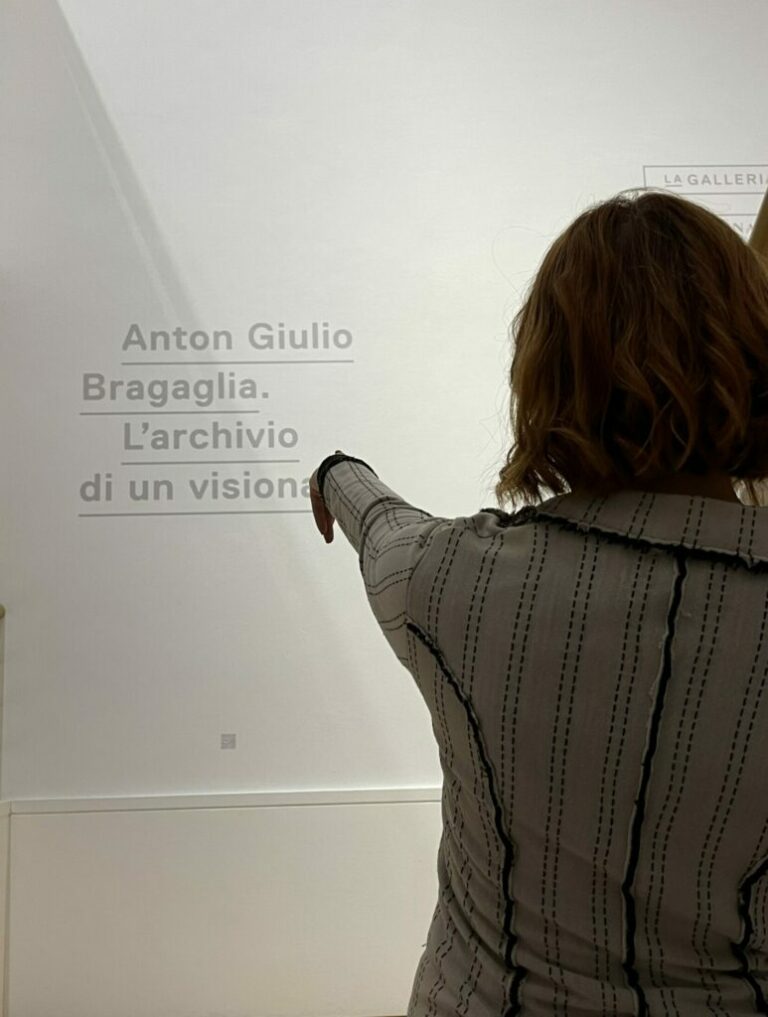
In 2021, the Galleria Nazionale d’Arte Moderna e Contemporanea in Rome presented Anton Giulio Bragaglia. L’archivio di un visionario.
The exhibition drew on the archive acquired by the museum in 2019. Photographs, posters, publications, and stage and costume designs traced the breadth of Bragaglia’s work.
The Italian Ministry of Culture’s exhibition page provides further information about this past exhibition.
Discover Antonio Donghi with Egidi MadeinItaly
Antonio Donghi’s Via del Lavatore, previously featured in our gallery’s selection, is no longer available. Its catalog entryremains accessible for reference.
You can also explore Donghi’s watercolor Landscape, circa 1955.
For information about this work, purchasing, or shipping, contact Egidi MadeinItaly.