


Antonietta Raphaël (Kaunas, then known as Kovno, c. 1895 – Rome, 1975) was a leading figure in the Roman School. A painter and sculptor, she brought a perspective shaped by music, Jewish culture, and European artistic encounters to Rome. Her work moved freely across different media while retaining a distinctive personal voice.
From London to Rome Music and Painting
The daughter of a rabbi, Raphaël grew up in Lithuania and moved to London with her family after her father’s death. She studied piano and taught music there. In 1924 she left England, spending time in Paris before arriving in Rome.
In Rome, she attended classes at the Academy of Fine Arts and met Mario Mafai, her partner in life and art. They had three daughters: Miriam, Simona, and Giulia.
Antonietta Raphaël and the Via Cavour School
In the late 1920s, the couple’s home and studio on Via Cavour became a meeting place with Scipione. In 1929, critic Roberto Longhi introduced the name Via Cavour School in connection with the artists’ work.
Raphaël contributed vivid color and an approach to the figure that challenged academic conventions. Her portraits, landscapes, and family scenes bring together observation, imagination, and memory.
Sculpture and the years of persecution
During the 1930s, she developed her interest in sculpture in Paris and London, where she came into contact with Jacob Epstein. Back in Italy, she explored the human body, intimate relationships, and biblical themes.
The Fascist racial laws of 1938 forced the family to seek refuge first in Tuscany and then in Genoa. Collectors Emilio Jesi and Alberto Della Ragione provided crucial support. Despite these difficult circumstances, Raphaël continued working.
Exhibitions and Recognition
Her work gained wider recognition after World War II. She exhibited at the Venice Biennale in 1948 and received a sculpture award at the Sixth Rome Quadriennale in 1952. That year, Rome’s Galleria Lo Zodiaco also presented an exhibition of her work.
In 1956, she traveled to China with a delegation of Italian artists that included Aligi Sassu and Giulio Turcato. The Eighth Quadriennale, held in 1959–1960, further established her place within the Roman School.
Later painting and printmaking
Sculpture remained important, but Raphaël continued painting. Omaggio a Mafai, completed in 1966, followed her partner’s death. Encouraged by Giuseppe Appella, she also pursued lithography in her later years. She died in Rome on September 5, 1975.
From May 23 to November 2, 2025, the Musei di Villa Torlonia presented Mario Mafai e Antonietta Raphaël. Un’altra forma di amore, revisiting their personal and artistic relationship.
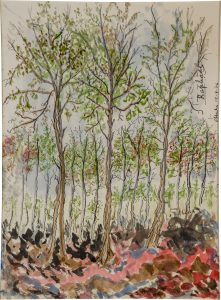
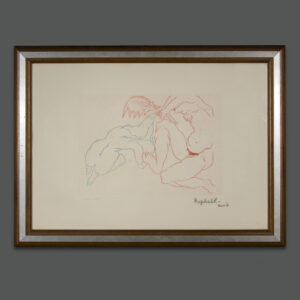
Works by Antonietta Raphaël in our catalog
You have a work by Antonietta Raphaël and you want to sell it?
Call us at +39 3356585431 or send us a message on WhatsApp at +39 3356585431
YOU CAN TRUST US
The highest valuations, expertise, and reliability
Appraisals, purchases and sale of the works by this artist